
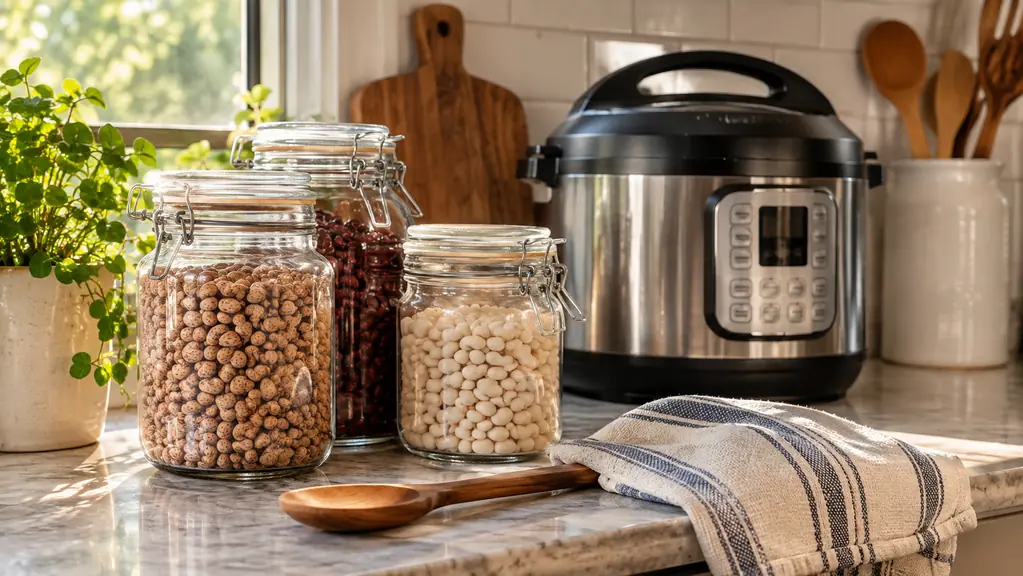
Dry beans used to be a Saturday project. I would sort them, soak them overnight, simmer them on the stove for two hours, and still end up with a pot that was half mush and half gravel. I ran a school cafeteria for twenty-six years, so I know my way around a big batch of beans. At home, cooking for two, I wanted the same result without babysitting a pot all afternoon. The Instant Pot Duo 6 quart has been in my pantry closet since last October, and it is the reason I make beans from dry again. It comes out two or three times a week for beans, pot roast, soup, stock, rice, and hard-boiled eggs. Once you get the ratios and the release right, dried beans stop being a project and start being a Tuesday.
Here is the short version. Rinse the beans, decide whether to soak, use enough water, cook them under pressure with the Bean program, and salt them after. The details matter more than the steps. The same bag of pinto beans can come out creamy or chalky depending on how long you cook them and how you let the pressure down. I learned that the hard way, with a batch of kidney beans that were still firm after a cook time I had copied from a website. This is the method I use now, for black beans, pintos, kidney beans, and chickpeas, with the adjustments I make for each.
The 6-quart Duo is the one I use for beans two or three times a week
It has the Bean program, a safe-locking lid, and a 6-quart capacity that fits a Sunday batch with room to spare. I bought mine with my own money last October.
Amazon Check Today's Price on Amazon →Step 1: Sort and Rinse the Beans
Pour the beans into a sheet pan or a wide bowl and pick through them. Remove broken beans, little stones, and anything that looks like it came from a field. This takes two minutes and saves your teeth. I do it at the counter by the sink, with the beans spread in a single layer so I can see them.
Rinse them in a colander under cool water. You are not trying to clean them sterile. You are washing off dust and the loose starch that makes the cooking liquid cloudy. Give them a few shakes and let them drain.
Sort and rinse even if the bag says they are pre-cleaned. I have found small stones in bags that claimed to be sorted. The one time I skipped this step, Gary found a pebble in his bowl. He was polite about it, but I have not skipped it since.
Step 2: Decide Whether to Soak
An overnight soak is not required in a pressure cooker, but it changes the texture. Soaked beans cook faster and hold their shape a little better. Unsoaked beans take longer under pressure and tend to split at the skins, which is fine for soup and less fine for a salad.
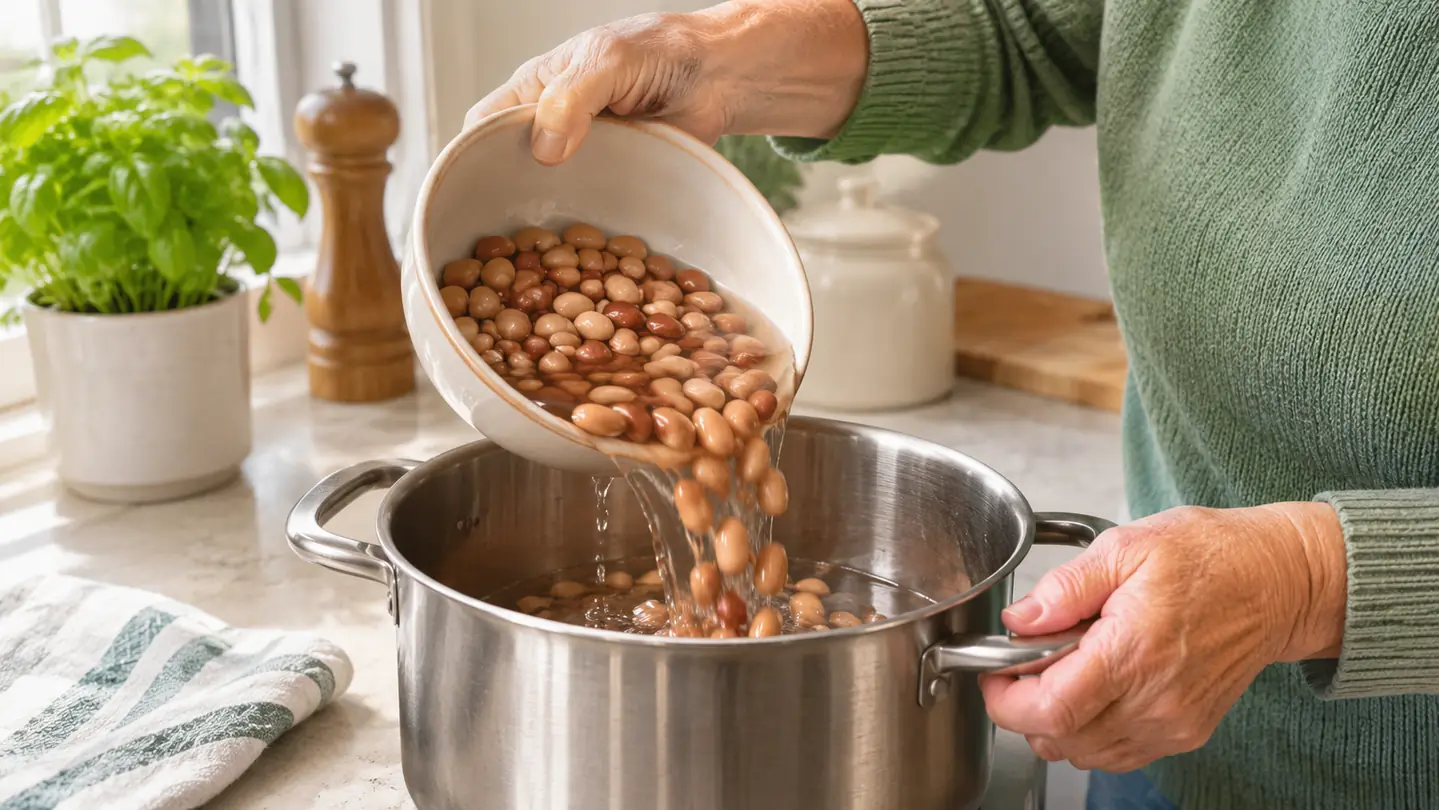
I soak pintos and kidney beans overnight when I remember. I do not soak black beans or lentils. Black beans come out fine unsoaked, and lentils turn to mush if you look at them wrong. If you soak, drain the water and rinse the beans before they go in the pot. Do not cook them in the soaking water unless you want a darker, starchier pot.
If you forgot to soak, you can do a quick soak. Put the beans in a pot, cover them with water, bring them to a boil on the stove, and let them sit for an hour. That is not a shortcut. It just gets you partway to the texture of an overnight soak. I use it when I decide at noon that I want beans for dinner.
Step 3: Use the Right Bean-to-Water Ratio
The Instant Pot needs enough liquid to come to pressure and cook the beans, but not so much that you are making soup by accident. I use three cups of water for every one cup of dried beans. That is for a 6-quart pot. If you are cooking a bigger batch, keep the ratio and leave room for the beans to expand.
For black beans, I use three cups of water per cup of beans. For chickpeas, I use four cups, because they swell more and I want enough liquid to keep them from drying out. For a bean soup, I use more water on purpose, usually five or six cups per cup of beans, and I adjust the seasoning at the end.
Add a tablespoon of oil if you want, but it is not required. I used to add oil to keep the foam down. Now I skip it. The beans foam a little, and that is normal. The lid has overheat protection and a safe-locking design, and the cooker is made to handle it. Do not fill the pot to the top. Beans expand, and a pot that is too full is how you get a mess on the counter.
Step 4: Set the Pressure and Let It Release
Put the lid on and turn it until it locks. Press the Bean program. I set the time by the bean, not by the clock on the wall. Pinto and black beans get 25 to 30 minutes. Kidney beans get 30 to 35. Chickpeas get 35 to 40. If I soaked them, I subtract five minutes. The Instant Pot will come up to pressure, cook for the time I set, and then stop.
I do not open the lid when the timer goes off. The safe-locking lid will not let me, and that is a good thing. I let the pot sit until the pressure comes down on its own. That takes 15 to 20 minutes, and it finishes the beans from the leftover heat. If I am in a hurry, I wait ten minutes and then let the rest of the pressure out. But I do not rush it from the start. A fast release on beans can split the skins and leave the centers chalky.
After the pressure is down, open the lid away from your face. The steam is hot. Taste a bean. If it is still firm, put the lid back on and give it five more minutes under pressure. If it is creamy, it is done. Do not stir the beans hard while they are hot. They break. I use a slotted spoon to move them and a ladle to serve them.
Step 5: Season After Cooking, Not Before
Salt and acid go in after the beans are tender. Salt added at the start can keep the skins from softening, especially with older beans. I learned that from a batch of kidney beans that stayed firm no matter how long I cooked them. Now I cook them plain and season at the end.
Start with a teaspoon of salt for a pound of beans, stir it in, and taste. Add more if it needs it. A squeeze of lime or a splash of vinegar goes in after the salt. Acid also slows softening, so it waits until the end. If you are making bean soup, season the broth at the same time you season the beans.
I add onion, garlic, and bay leaf before cooking if I have them. Those are aromatics, not salt or acid, and they do not stop the beans from softening. I put a halved onion and two cloves of garlic in the pot with the beans and fish them out later. A bay leaf goes in and stays in. It is a small thing, but it makes the beans taste like more than beans.
The safe-locking lid will not let you open the pot until the pressure is down. That is not a quirk. It is the reason I trust it with a pound of beans.
A Few Bean-by-Bean Notes
Black beans are the easiest. I rinse them, skip the soak, and cook them for 25 minutes with three cups of water per cup of beans. They come out tender enough to mash against the side of the pot but still hold their shape. I use them for tacos, rice bowls, and a pot of black bean soup that Gary asks for when the weather turns.
Pinto beans are the ones I soak. They take 30 minutes unsoaked, but the skins split more. Soaked pintos take 25 minutes and hold together better. I use them for refried beans, which means I mash them with a potato masher after they cook. The Instant Pot does not mash them for you. That part is still by hand, and I am fine with that.
Kidney beans need the most respect. They take 30 to 35 minutes, and they need a full natural release. If I rush the pressure down, the skins crack and the beans turn mealy. I also boil kidney beans on the stove for ten minutes before they go in the pressure cooker. That is the one bean where I do not skip the extra step. It is a safety habit I picked up in the cafeteria, and I have kept it at home.
Chickpeas are the longest cook. I soak them overnight if I can, then cook them for 35 to 40 minutes with four cups of water per cup of beans. They come out firm enough to toss in a salad and soft enough to mash for hummus. I save the cooking liquid and use it to thin the hummus. It also goes into soup.
The Mistakes I Made
The first mistake was filling the pot too full. I put two pounds of beans in the 6-quart Instant Pot and added water without thinking. The beans expanded, the pot came up to pressure, and I had a mess to clean before dinner. Now I cook one pound at a time, or two pounds only if I use a bigger pot. The 6-quart Duo is rated to cook for up to six people, and that is the batch size I stick to.
The second mistake was salting at the start. I thought salt would season the beans from the inside out. It did, but it also kept the skins tough. Now I salt at the end, taste, and add more if it needs it. The beans come out creamy instead of leathery. It is a small change with a big difference.
The third mistake was rushing the release. I was hungry, the timer went off, and I let the pressure out fast. The beans split and the centers were still chalky. The safe-locking lid is there to keep you from opening it too soon, but you can still rush the pressure if you try. I do not try anymore. I set the beans to finish before I am hungry, and I let them sit.
What Else Helps
Older beans take longer. That is the one variable I cannot fix with a setting. If the bag has been in the pantry for two years, add five minutes and expect a few split skins. I write the purchase date on the bag with a marker. It sounds fussy, but it saves a dinner.
The 6-quart Instant Pot is the right size for my house. It is 13.38 inches wide and 12.2 inches deep, and it weighs 14.6 pounds. It lives in the pantry closet because my counter is only about eight feet long. When it comes out, it takes up a real spot. I do not leave it on the counter all day. I set it on the counter by the range, plug it in, and put it back when the pot is clean.
Cleanup matters. The cooking pot lifts out and goes in the sink. I rinse it while it is still warm, and the starch comes off with a sponge. The lid needs to be washed by hand and left to air dry. I do not put the lid in the dishwasher. The rest of the pot is easy. That is the test for any appliance in my kitchen. If it is a pain to wash, it stays in the pantry.
If you want beans from dry on a weeknight, this is the pot I reach for
The 6-quart Instant Pot Duo has the Bean program, a safe-locking lid, and enough room for a pound of beans with space to expand. It is the same one I bought last October and use two or three times a week.
Amazon Check Today's Price on Amazon →