Reheating leftovers is where a lot of kitchens quietly give up. The microwave does it in ninety seconds and turns last night's roast chicken into something with the texture of a dish sponge. Pizza comes out limp. Fries come out wet. Fried chicken goes leathery on the outside and stays cold in the middle. I spent twenty-six years reheating food for a few hundred kids a day, and the microwave was never the answer. It was just the fastest way to stop hearing complaints.
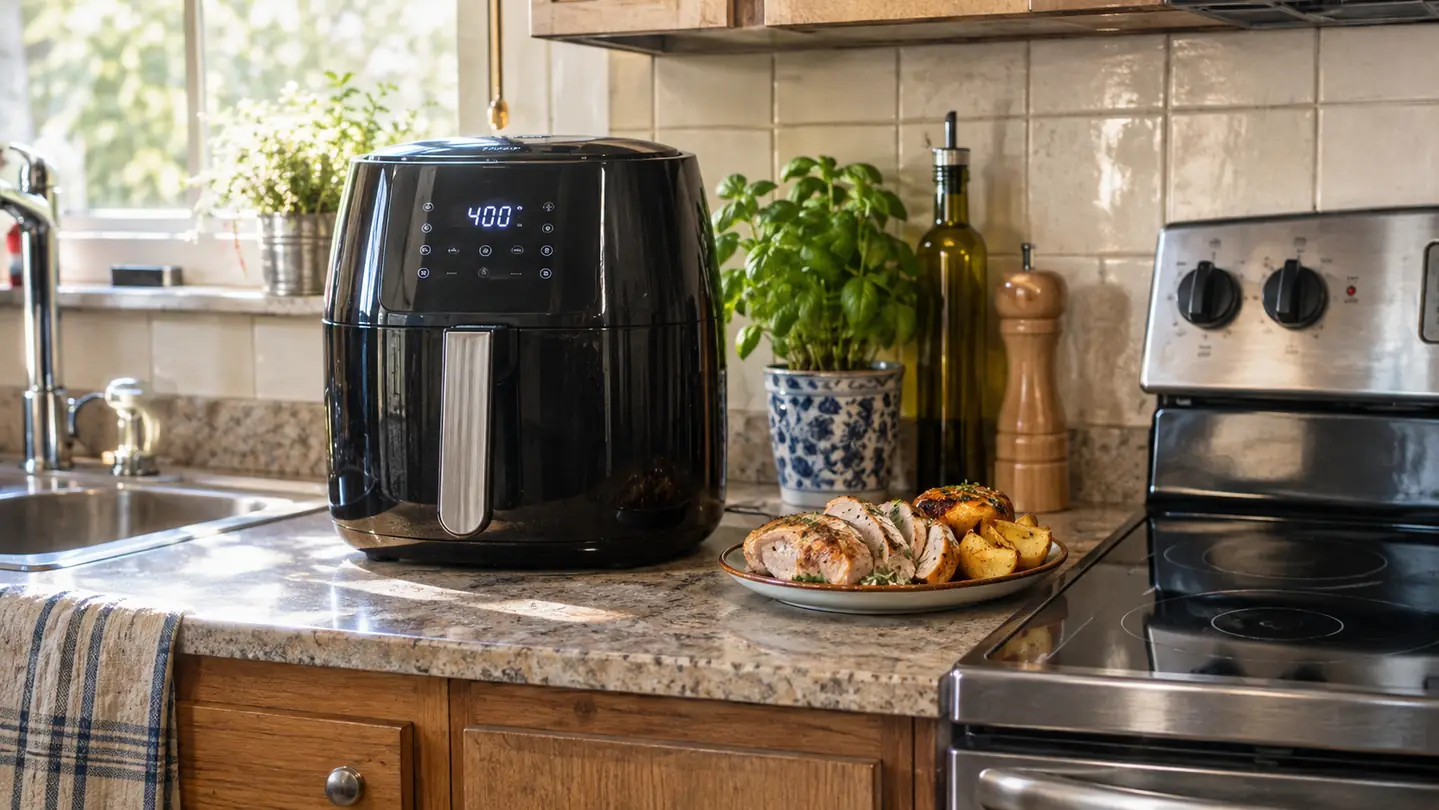
What changed at home was the Ninja AF101 Air Fryer, a 4-quart basket model I bought in early March and have used three or four nights a week since. It lives to the left of my range, always plugged in, and it earns that spot in a kitchen with about eight feet of usable counter. The surprise was not the crisping, though it does that well. It was how much better yesterday's food tasted than the same food warmed any other way. Here is how I do it, in five steps, including the mistakes I made first so you do not have to.
The 4-quart basket that made me stop dreading leftovers
The Ninja AF101 has touch controls, four cooking programs and a ceramic-coated basket and crisper plate that go in the dishwasher. It has held its spot on my counter since March.
Amazon Check Today's Price on Amazon →Step 1: Sort the leftovers before anything else
Not everything belongs in an air fryer. I learned that with a bowl of chili. It was a Tuesday in April, a cold wet one, and I had maybe two cups left from Sunday. I poured it into a small oven-safe dish, set it in the basket at 350°F and gave it six minutes, feeling clever. What came out was chili with a skin on top and a lukewarm middle, and the basket smelled like cumin for two days afterward. The rule I use now: if it was crisp, roasted or breaded when it was first cooked, the air fryer will bring it back. If it was wet when it was first cooked, it will either stay wet or dry into something worse.
The yes list: fried chicken, roast chicken with the skin on, pizza, french fries, roasted potatoes, egg rolls, breaded fish, meatballs, roasted vegetables that are not already soft, grilled cheese, and anything with a crust on it. Steak and burgers work if you keep the time short and watch them. They go past medium faster than you expect. A skirt steak I reheated in May went from rare to grey in what felt like a minute and a half, and I have been careful with beef ever since.
The no list: soup, stew, chili, rice, pasta in sauce, mashed potatoes, and anything you want to stay soft. Those go on the stove or back in a pot. Rice is the one people argue with me about. Reheated rice in a hot basket dries at the edges and stays clumped in the middle, and no amount of shaking fixes it. The Ninja basket is not a saucepan and it will not pretend to be one. Trying to make it one is how people end up with a burnt-on mess and a bad opinion of air fryers.
Step 2: Dry the surface, then add a thin coat of fat
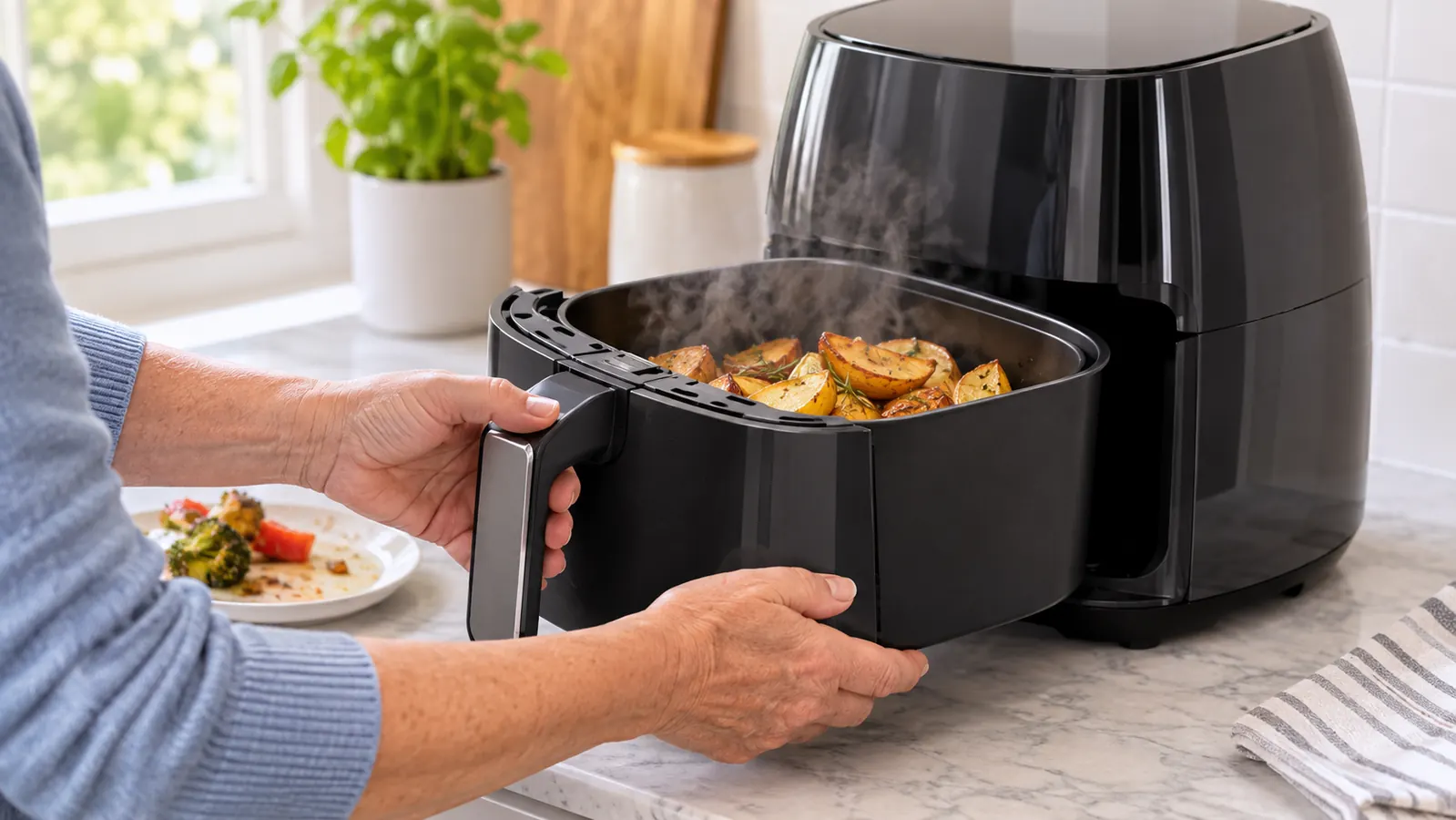
Moisture is the problem. A wet surface steams instead of browning, and in a small basket the steam has nowhere to go, so it settles right back onto the food. Pat everything dry with a paper towel first. Chicken skin, pizza crust, the cut side of a potato, all of it gets a press. The first time I reheated pizza I skipped this, because who dries pizza, and I got a slice with a crust like a cracker and a center that sagged when I picked it up.
Then a thin coat of oil. Not a pour. A spray, or a teaspoon tossed through in a bowl. The basket is ceramic-coated and nonstick, so you are not adding fat to stop sticking. You are adding it so the surface browns instead of drying out. A bare breaded surface goes chalky in fast-moving hot air. I keep a spray can of plain oil by the range for this and nothing else, and one light pass over the top of the food is the whole job.
One caution: use silicone tongs or a spatula, not metal, and wash the basket with the soft side of the sponge. I scratched a nonstick pan years ago and I have not made that mistake twice. A scratched coating is the fastest way to shorten the life of a basket that should last a good while. The basket and crisper plate are dishwasher safe, and I do run them through, but I still give the coating a quick look before I stack anything on top of it in the dishwasher rack.
Step 3: Use the Reheat program and keep the heat moderate
The touch panel on the AF101 gives you four programs: Air Fry, Roast, Reheat and Dehydrate, with a temperature range of 105°F to 400°F. For leftovers I use Reheat, and I keep the setting under 350°F for anything already cooked through. High heat on cooked food dries the outside before the middle has had a chance to warm. When I first got it I ran everything at 400°F because hot is better, or so I thought. The chicken thighs that came out of that experiment had skin like a potato chip and meat that needed a glass of water.
You do not need to preheat for most reheat jobs. I give it three minutes when I am doing fries or pizza, because a hot basket starts the browning immediately and the first two minutes are not wasted. For a plate of chicken thighs, a cold start is fine and saves a step. This is one of those small decisions that does not matter much on any single night and matters a lot when you are doing it four nights a week.
The unit is 1550 watts and it moves a serious amount of hot air around that basket. That is the whole reason it works, and it is also why you cannot walk away for fifteen minutes and assume it is fine. It is not a slow oven. It is a small, fast, loud box, and it wants your attention for six minutes. In a school kitchen the ovens were big enough that you could walk away. This one is not, and I learned that the same week I learned to dry the pizza.
Step 4: One layer, no crowding, shake halfway
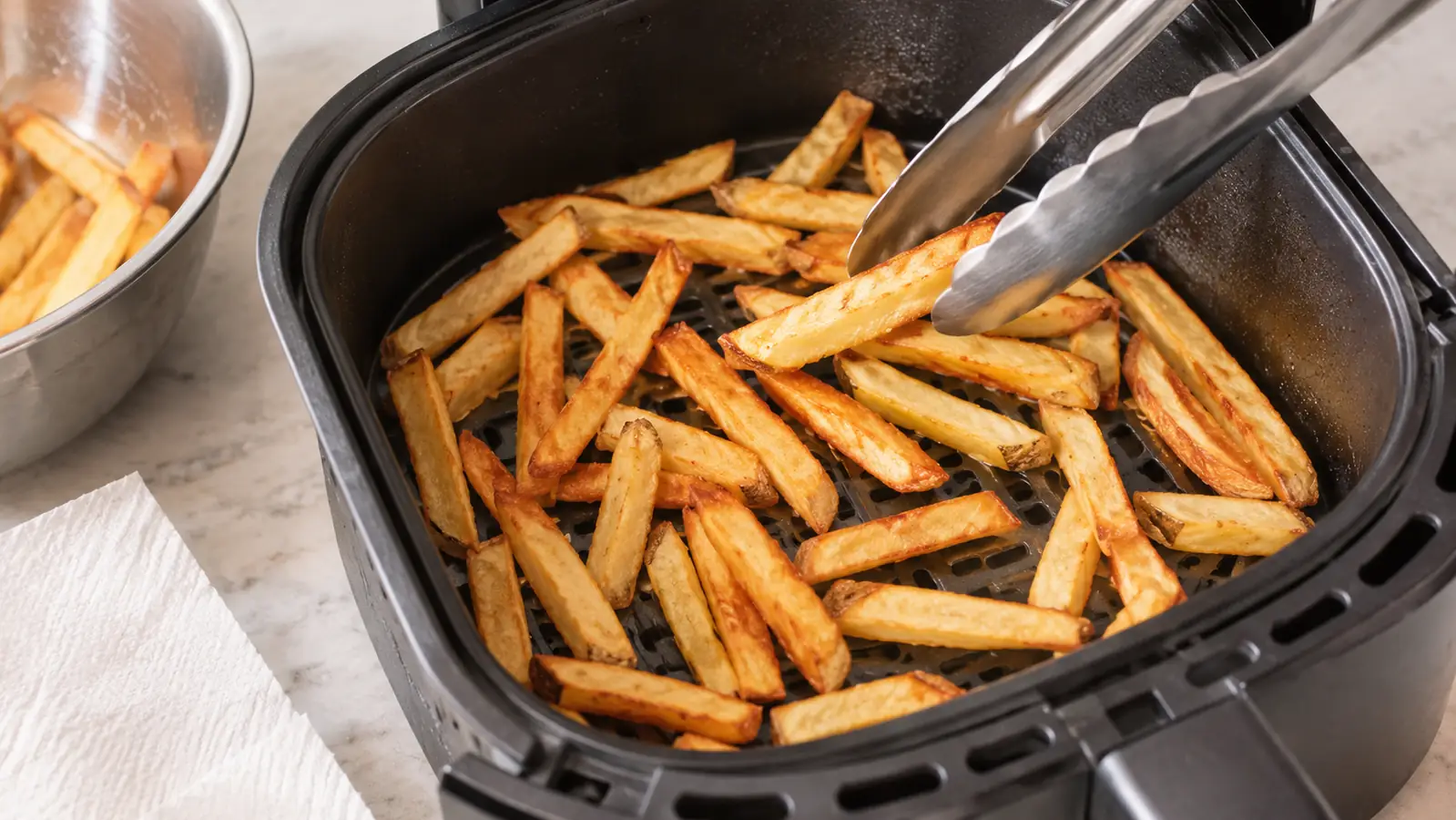
This is the step people skip, and it is the one that decides whether dinner is crisp or steamed. The 4-quart basket is listed as fitting 2 lbs of french fries, which sounds like a lot until you pile leftovers in and realize the air cannot get between the pieces. I tested it once out of plain stubbornness, dumping a full bag of frozen fries in for the grandkids with the idea that one batch was faster than two. Twelve minutes later I had a layer of crisp fries on top and a layer of pale, soft ones underneath, and I ended up running the pale ones a second time anyway.
Single layer, with a little space between pieces. If it does not fit, do two batches. Two batches of eight minutes beats one batch of sixteen every time. On Sundays when the family comes I run two batches and hold the first one in a warm oven set low, which works better than trying to be clever about it. The four grandkids come about twice a month, and they eat fries the way kids do, which means I start the second batch before the first one is finished.
Pull the Ninja basket out halfway through and shake it, or turn the pieces with tongs. The spots touching the crisper plate brown first. Halfway is usually four or five minutes in, depending on what you are reheating. You will hear the difference in the sound of the basket sliding back in, and you will smell it too. If it smells sharp and dry, you are already past where you wanted to be.
Step 5: Start short, check early, and let it rest a minute
Leftovers are already cooked. You are warming and re-crisping, not cooking from raw, so the times are shorter than a recipe card would have you believe. Fries take five to seven minutes. Pizza, four to five. Fried chicken, six to eight. Roasted vegetables, five to six. Chicken thighs, seven to nine depending on size. These are the numbers I use at 350°F, and they have held for eight months of three-or-four-nights-a-week use.
Check two minutes before you think it is done. The gap between crisp and dry is about ninety seconds, and once food is dry you cannot put the moisture back. Open the basket, take one piece out, cut into it. If the middle is hot, you are finished. I keep a small paring knife on the counter for exactly this and nothing else, and it costs me five seconds a night.
Then let it sit on the plate for a minute before you serve it. The surface firms up and stops steaming itself. If you dump it straight into a container and snap the lid on, you have undone everything the last eight minutes accomplished, and the next morning you will blame the machine. Gary noticed this before I did. He pointed out that the fries I boxed up hot for lunch the next day were the disappointing ones, not the ones that sat on a plate first.
The gap between crisp and dry is about ninety seconds, and once food is dry you cannot put the moisture back.
What Else Helps
Clean the basket between jobs. A dirty basket smokes, and last night's salmon will absolutely find its way into tonight's pizza. The basket and crisper plate are dishwasher safe, which is the main reason this one stayed on my counter instead of going into the pantry closet. Gary does the dishes most nights and he has never once complained about it, which I consider a review. A quick wipe of the inside of the unit with a damp cloth once a week keeps the smell from building up in the drawer under the range.
Give it room. The unit measures 13.6 inches deep, 11 inches wide and 13.3 inches tall, and it weighs about 10.6 pounds. It needs a few inches of clearance behind it for the vent. When it first came home I set it against the backsplash and the cabinet above it got warm to the touch after a run of fries. Now it sits to the left of the range with the vent side clear, and the cord reaches the outlet without an extension cord, which matters when you have eight feet of counter to work with and no extra outlets.
Write your times down. I keep a list on the inside of a cabinet door: fries 6, pizza 5, chicken 8. It sounds fussy. It took ten minutes to make and it has saved me from guessing several hundred times since March. If you have a bigger model, or your daughter has one and you are cooking at her house, her times will not be your times. The number on the door is the number that works in your kitchen.
Use foil sparingly, and never cover the food. A sheet of foil in the bottom helps with something messy like meatballs, but it cannot block the holes in the crisper plate. And no lid. Covering food is a microwave habit, and it is exactly what you are trying to get away from. The booklet that came with the unit holds twenty recipes, and the notes in the back are worth a look before you start improvising.
One more thing: do not overload the basket hoping to save a batch. I did it twice. Both times I ended up with food that was hot on the outside, lukewarm in the middle and soggy on the bottom, and both times I had to run it again anyway. The second batch is faster than the do-over. This is the one habit from twenty-six years of cafeteria cooking that I had to unlearn, because in a school kitchen you always cook in volume. At home, with one basket and two people, volume is the enemy.
Eight months in, it has not lost its spot on my counter
The Ninja AF101 is 4 quarts with touch controls and a temperature range from 105°F to 400°F. The basket and crisper plate go in the dishwasher. It is the appliance I reach for most after the coffee maker.
Amazon Check Today's Price on Amazon →