
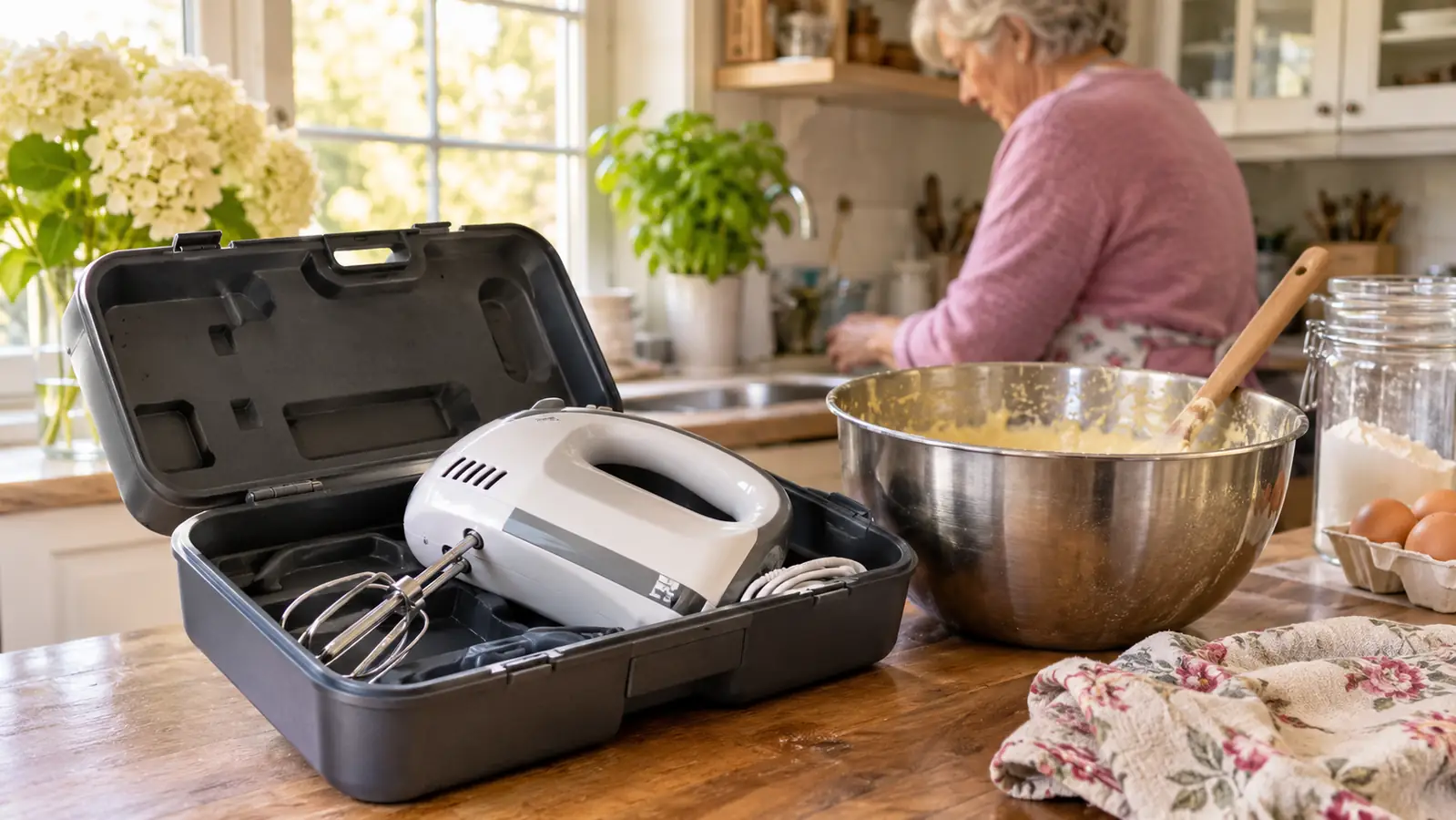
Nobody writes a love letter to a hand mixer.
Which is a shame, because it is the appliance I reach for more often than any other in this kitchen. When the mixer I had from the 1990s finally quit, I did what everyone does now. I sat down and read reviews. Most of them were three lines long. The rest were written by somebody who had owned the thing for a week and was still excited about the box. That is not much help when you are trying to decide what to put in the cart.
So here is the version I wanted to find. I am 64 years old, I spent 26 years running a school cafeteria kitchen, and I now cook dinner most nights for two. I bought the Hamilton Beach 6-speed hand mixer with my own money about four years ago. It replaced the mixer from the 1990s, it lives in a drawer in its snap-on storage case, and it comes out roughly once a week for Sunday desserts, whipped cream, cookie dough, mashed potatoes and egg whites. Four years of that is enough time for the shine to wear off, and enough time to know what a thing is actually like when it is not new.
The Quick Verdict
A genuinely good small-kitchen mixer that has survived four years of weekly use. It gives up ground on warranty length and in stiff double batches of dough, and it takes a month to stop pressing the eject by accident.
Amazon Check Today's Price →The mixer that came out of the drawer most weeks for four years
If you want the short version before the long one, this is the mixer I would buy again and the one I recommend to friends who cook for two. Today's price is on the listing, and a hand mixer is the whole reason a small kitchen does not need a stand mixer bolted to the counter.
Amazon Check Today's Price on Amazon →How I've Used It, and What Has Not Broken Yet
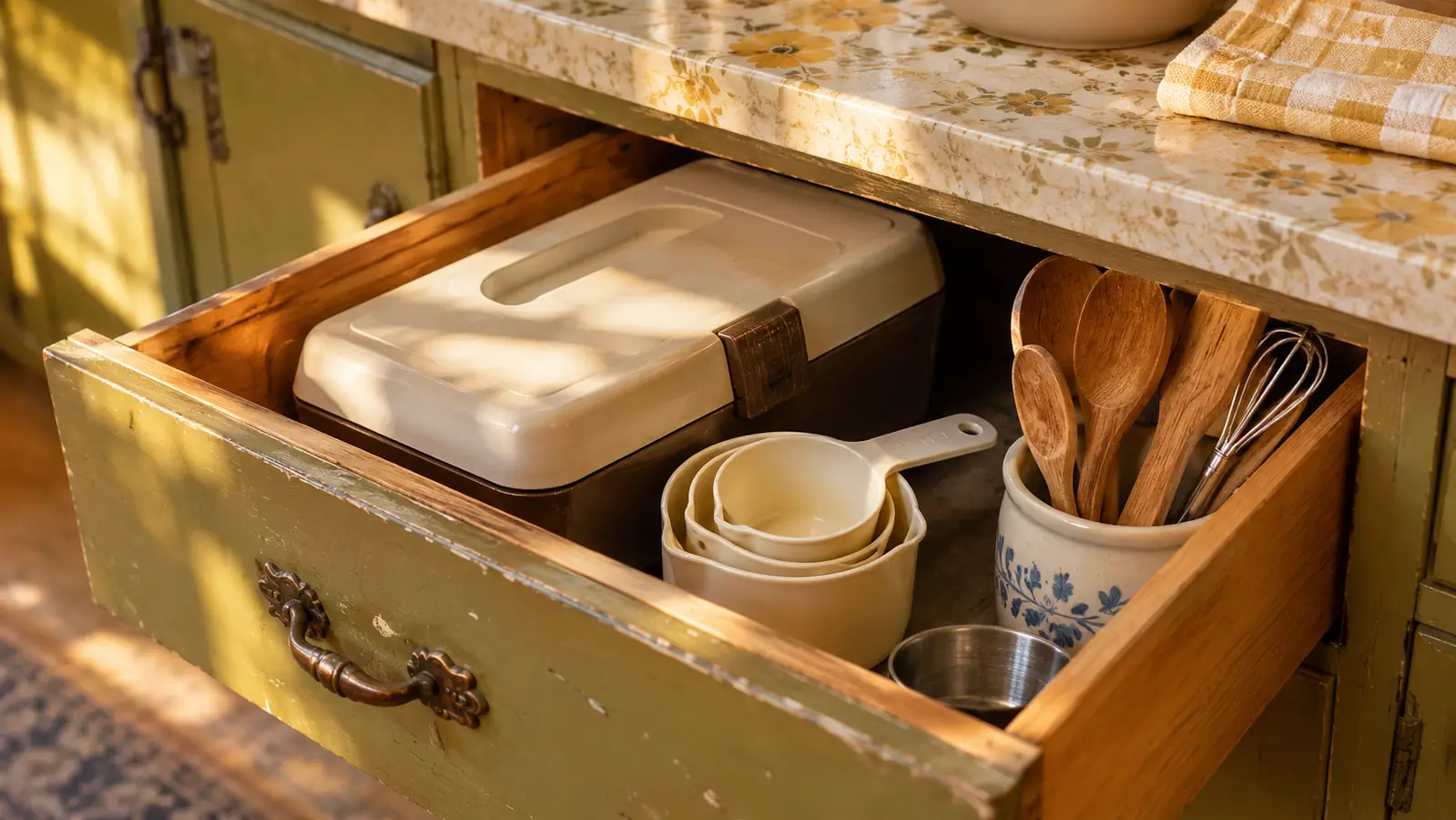
The drawer it lives in is the one just left of the range, and the case sits on top of the measuring cups. That is the entire storage story. I do not have to clear counter space to use it, I do not have to move anything out of the way, and I do not have to think about it until I need it. In a kitchen with about eight feet of usable counter, that counts for more than any line on the box.
The first thing I mixed with it was a pint of cream for a birthday cake, four years ago, and I stood at the counter braced for the same thing that killed the old one. It whipped the cream in about three minutes and the housing never got warm. The cord is five feet, which reads like a listing bullet until you are working at the far end of the counter with the outlet behind the range. Five feet reaches from that outlet to the far side of my counter with slack to spare. Shorter cords do not, and that is a small thing that turns into a daily annoyance.
What it actually does in a month: whipped cream for Sunday dessert when the grandkids are here, cookie dough around the holidays and for birthdays, mashed potatoes when I want them smooth, egg whites when something needs folding, and the occasional box of cake mix when I am not pretending to be impressive. That averages out to about weekly. Sometimes twice, if there is a birthday in the family.
I should be upfront about my standards, because they are not normal. For 26 years I ran the big commercial floor mixers in a school cafeteria, the kind with a bowl the size of a laundry basket. I know what a motor sounds like when it is working comfortably and what it sounds like when it is straining. At home I have never owned a stand mixer. What I know about them comes from that cafeteria and from my sister Carol's kitchen. So when I say this hand mixer handles what I ask of it, I am comparing it against commercial equipment, not against the cheapest thing on the shelf.
Six Speeds and the QuickBurst Button, Rated Honestly
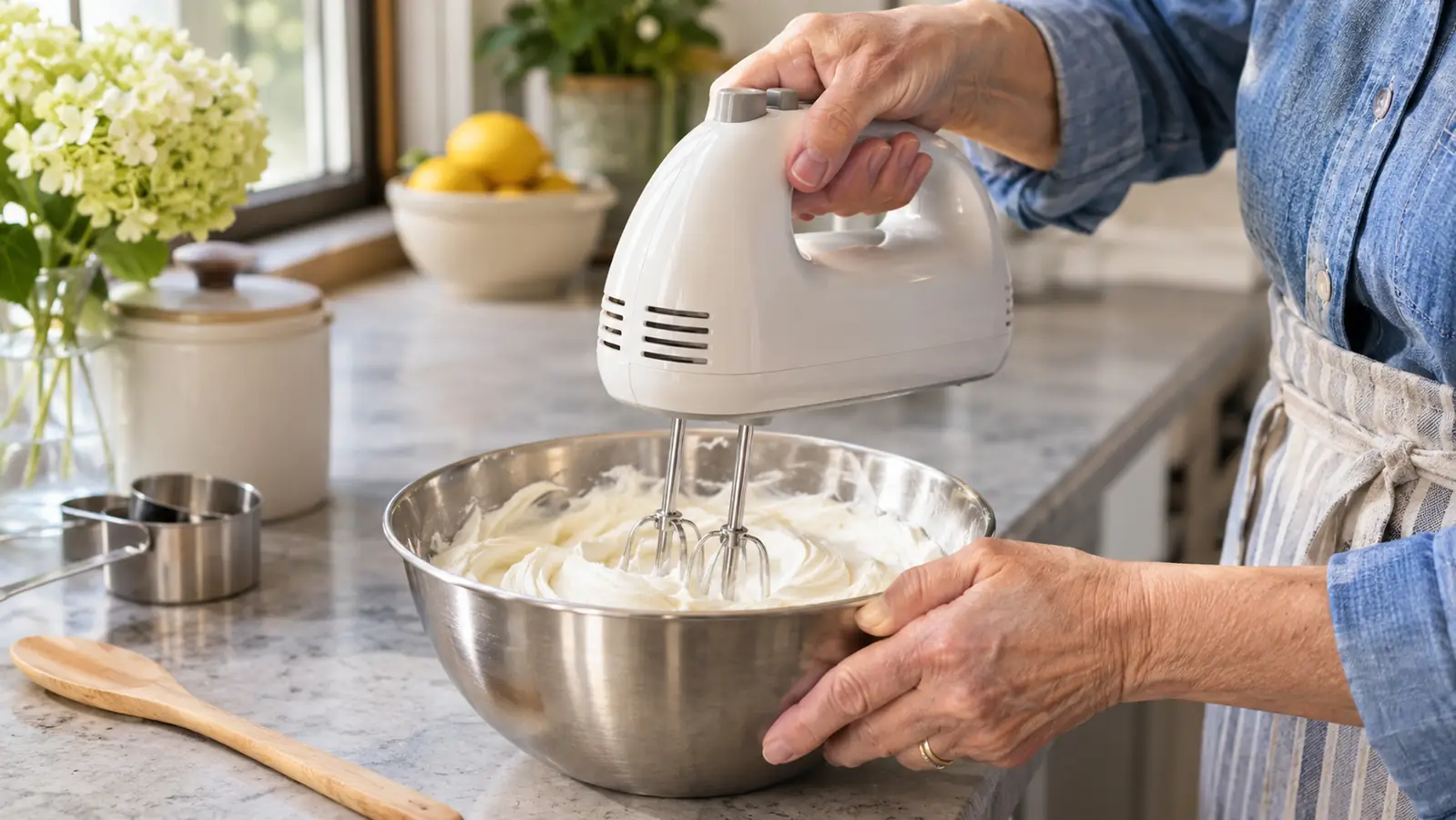
Six speeds is more than I use, and I will say so plainly. In practice I live between one and four for most jobs and only go up to five or six for cream and egg whites. The low speeds are the ones that matter, because low speed is what keeps flour in the bowl instead of on the backsplash and keeps cocoa out of the grout. Plenty of inexpensive mixers have a low setting that is not actually low, and you find that out the first time you beat flour into butter. This one starts slow enough to be useful.
Creaming butter and sugar is the job that separates a real low speed from a fake one. For a pound cake I leave the butter out on the counter for about an hour, beat it with the sugar on speed two or three until the mixture goes pale, and the whole thing takes a few minutes. The first one I made with this mixer I overbeat, because I was still timing it the way I timed the old one, and the cake came out a little flat. The second came out right because I stopped looking at the clock and started looking at the bowl. That is not the mixer's doing. It is what happens when you change machines after that many years.
The QuickBurst button gives an extra burst of power while you hold it. I use it in the last ten seconds of whipping cream, when the cream is almost where I want it and I would rather not move the dial and overshoot. Would I buy this mixer for that button alone? No. Would I miss it if it were gone? Yes, more than I expected to. That is my honest rating on it.
One quirk worth knowing before you buy. The speed dial on the Hamilton Beach is also the eject. You press the dial and the beaters release. I turned it the wrong way for the first month and popped the beaters out mid-batch once, which is exactly as funny as it sounds and not funny at all at the time. Now I stop the mixer first, then press, and it is automatic. It is not a design flaw so much as a habit you have to build, and nobody warns you about it.
The Bowl Rest Is the Small Thing I Would Miss Most
The bowl rest is the feature I did not know I wanted and now use every single time. You tilt the mixer and it sits on the rim of the bowl instead of going down flat on the counter. That sounds trivial until you remember what usually happens with a hand mixer. You set it down mid-batch in a puddle of batter, or you hold it in the air with one hand while you reach for the spatula with the other, and your wrist lets you know about it later.
It works best on a bowl with a decent rim. My stainless mixing bowls have one and the mixer sits on them without any fuss. The flimsier plastic bowl I use for small jobs has almost no lip, and the mixer does not perch on it nearly as well. That is the whole limitation, and it is a mild one. If you own only rimless bowls and hate holding things, know it going in.
The Snap-On Storage Case Is Why It Lives in a Drawer
The Hamilton Beach snap-on case holds the mixer, both traditional beaters and the whisk, and it snaps shut. Four years in, everything is still in it. I want to be clear about how unusual that is in this house. My old mixer's beaters lived loose in the utensil drawer, and somewhere along the way one of them disappeared into whatever dimension swallows loose beaters. I mixed with one beater and a spatula for two years and told myself it was fine.
I measured the case once, out of curiosity, because I am tired of buying things that do not fit anywhere. The mixer body itself is a little over eight inches front to back, under six wide and about nine tall, and the case adds a bit on each side of that. The drawer it lives in is fourteen inches deep, so the case slides in with room left in front of it for the measuring cups. If your drawers are shallow, measure before you count on drawer storage, because this is not a flat thing you can lay on its side and forget about.
Both the beaters and the whisk are dishwasher safe, and they go in the top rack when I am running it anyway. Most nights I rinse them and stand them in the drainer, which takes less time than loading them. The mixer body gets wiped with a damp cloth and never dunked, same as any corded appliance in my kitchen.
Cleaning and Care, Which Is Most of the Job
The honest truth about any hand mixer is that the motor is not the part you deal with. It is the cleanup. Beaters with batter packed in the middle of them, a bowl to scrape, a counter to wipe where the flour went. This one is no worse than any other on that front, and slightly better than some because the beaters come off with one press and there is a case to drop them into rather than a wet sink to fish them out of.
On a Sunday when I have used it for cream and then for a cake, the beaters go in the top rack and the bowl goes in the sink. The body gets wiped with the same damp cloth I use on the range, and the cord gets wiped too, because the cord is the part everyone forgets and then wonders why the drawer smells faintly of vanilla. Four years of that routine and the plastic still wipes clean. There is one seam on the housing where flour collects if I am careless, and a fingernail gets it out in a second.
I have run the beaters and the whisk through the dishwasher for four years. Nothing has bent, chipped or rusted. The stainless steel still looks like stainless steel. The plastic body has a couple of faint scuffs from sharing a drawer with the measuring cups, which is cosmetic and does not bother me, but I would rather mention it than have you find it and wonder.
How It Compares to the Floor Mixers I Ran for 26 Years
People ask me this and I always give the same answer. A hand mixer is not a small stand mixer and it is not supposed to be. Those cafeteria machines did not care what you put in the bowl because they had a motor the size of a coffee can and a bowl that weighed more than the mixer. This one cares. Push it into stiff dough and you will hear the pitch change and the beaters slow down. That is not a defect, it is a 250 watt motor doing an honest job.
Where a hand mixer wins is everywhere else. It is in the drawer, not on the counter. It is light enough to hold with one hand through a full batch of cream. It washes up in two minutes. When my sister Carol complains about lifting her stand mixer head out of the way to get at the bowl, I keep my mouth shut, but I am thinking about my drawer.
Where the Hamilton Beach Hand Mixer Falls Short
The warranty is one year limited. That is not generous, and I would rather say so than dress it up. Mine is four years old and fine, so I am not lying awake over it, but if a long warranty is one of the things you are paying for, this is not the mixer that gives it to you.
The motor is 250 watts, and it behaves like it. A single batch of cookie dough is nothing to it. Double the batch and let the dough stiffen up and you can hear it working harder while the beaters slow down. It has never stopped on me and it has never quit, but I would not push a stiff double batch through it every week for ten years and expect the same answer. This is a mixer for home quantities. I say that as somebody who has used both kinds, and I mean it as a description, not a complaint.
You hold it. That is the tradeoff of every hand mixer rather than a flaw of this particular one. Whipping cream takes a few minutes and your arm knows it. You cannot walk away to check the oven, because the mixer goes where you go. When my right shoulder acts up in the winter, I notice, and on those days I make something that does not need whipping.
And a warning from experience rather than from the listing. Do not use a hand mixer on potatoes for long. Thirty seconds to break up the big lumps, then switch to a masher. Keep going and you get paste. I learned that in the cafeteria and I have watched other people learn it in their own kitchens, usually right before Thanksgiving.
What I Liked
- Snap-on case keeps the mixer, both beaters and the whisk together in one place
- The bowl rest lets you set it down on the bowl instead of the counter
- QuickBurst is genuinely handy at the end of whipping cream
- Six speeds with a low end that is actually slow, so dry ingredients stay put
- Beaters and whisk are dishwasher safe and have held up to four years of it
- Light enough to hold one-handed through a full batch
Where It Falls Short
- One year limited warranty
- 250 watts shows its limit in stiff double batches of dough
- The speed dial is also the eject, which takes a month to get used to
- The bowl rest works best on bowls with a real rim
- No stand, so your arm does the holding
Four years of weekly use and the original beaters, the whisk and the case are all still here. That is most of the review, really.
Who This Is For
This is for the person cooking for one or two who wants dessert on a Sunday without a machine holding court on the counter the rest of the week. It suits small kitchens, apartments and anybody who has sighed at the idea of hauling a stand mixer out of a cabinet. It is for creaming butter and sugar, whipping a cup of cream, beating eggs, folding egg whites and mixing a cake, and it does those things without drama. If that is the list you have, this mixer will keep doing it for years.
Who Should Skip It
Skip it if you bake bread or stiff dough regularly, if you make big batches for a crowd every week, or if shoulder or wrist trouble makes holding a mixer for four minutes a chore. In those cases a stand mixer earns its footprint, and I would not talk you out of one. Skip it too if a one year warranty bothers you enough that you would rather pay more for a longer one. That is a fair reason. This mixer is good, and it is not the only right answer.
The version I would buy again, four years later
It is not the fanciest mixer on the listing page and it will not win an argument with a stiff double batch of dough. It is the one that has lived in my drawer for four years, come out most weeks, and never once failed to finish what I started. For a kitchen cooking for two, that is the whole job.
Amazon Check Today's Price on Amazon →