

Whipping a cup of cream with a hand mixer takes about ninety seconds, and nearly everyone I know either stops too early or keeps going until they have butter. I spent twenty-six years running a school cafeteria, where cream went into a floor mixer the size of a dishwasher, and I have spent the four years since doing the same job at home in Nashua with a Hamilton Beach 6-speed hand mixer I bought myself. The machine is not the hard part. The hard part is knowing what you are looking at through the side of the bowl, and being willing to stand there for two minutes and watch it.
Two things go wrong in a home kitchen. Cream whips past stiff peaks into a grainy mess, and egg whites sit there looking like dishwater because a drop of yolk got in or the bowl had a film of fat on it. The usual advice is to buy a stand mixer, which is fine if you have the counter and the space in your life for a machine that does one job standing still. I do not. My kitchen has about eight feet of usable counter and one drawer, so what I have is a hand mixer, a snap-on case, and a set of steps that work the same way every single time.
Whipped cream in two minutes, without giving up a foot of counter
Six speeds, a QuickBurst button for the last push, two beaters and a whisk that go in the dishwasher, and a snap-on case so the whole thing lives in a drawer. My Hamilton Beach has been in that drawer for four years and still starts on the first click.
Amazon Check Today's Price on Amazon →Five Steps, Start to Finish
Step 1: Get the temperatures right, and they are not the same temperature
Cream wants cold. Put the bowl and the beaters in the freezer for ten minutes while you get everything else out, and keep the cream in the refrigerator until the moment you pour it. Heavy cream, not half and half, and not the light version in the skinny carton. If the carton has been sitting on the counter while you made the cake, put it back in. Warm cream takes longer, whips thinner, and is much more likely to turn on you before it ever stiffens. On a humid July afternoon in New Hampshire I have also set the bowl in a larger bowl of ice water, which sounds fussy and is not.
Egg whites want the opposite. They whip faster and to more volume at room temperature, so separate them while they are still cold, straight from the refrigerator, because cold yolks hold together better and a broken yolk is the end of that batch. Then let the whites sit in the bowl for fifteen or twenty minutes while you do something else. That one change is worth more than any gadget I own, and it costs nothing but a little planning.
The bowl matters more than people think. Glass or stainless for whites, never plastic, because plastic holds onto fat from a hundred earlier meals no matter how well you wash it. Wipe the bowl and the beaters with a paper towel and a splash of vinegar before the whites go in. It takes ten seconds and it saves the batch. I keep a spray bottle of white vinegar under the sink for exactly this, and for the cutting board, and for the inside of a thermos.
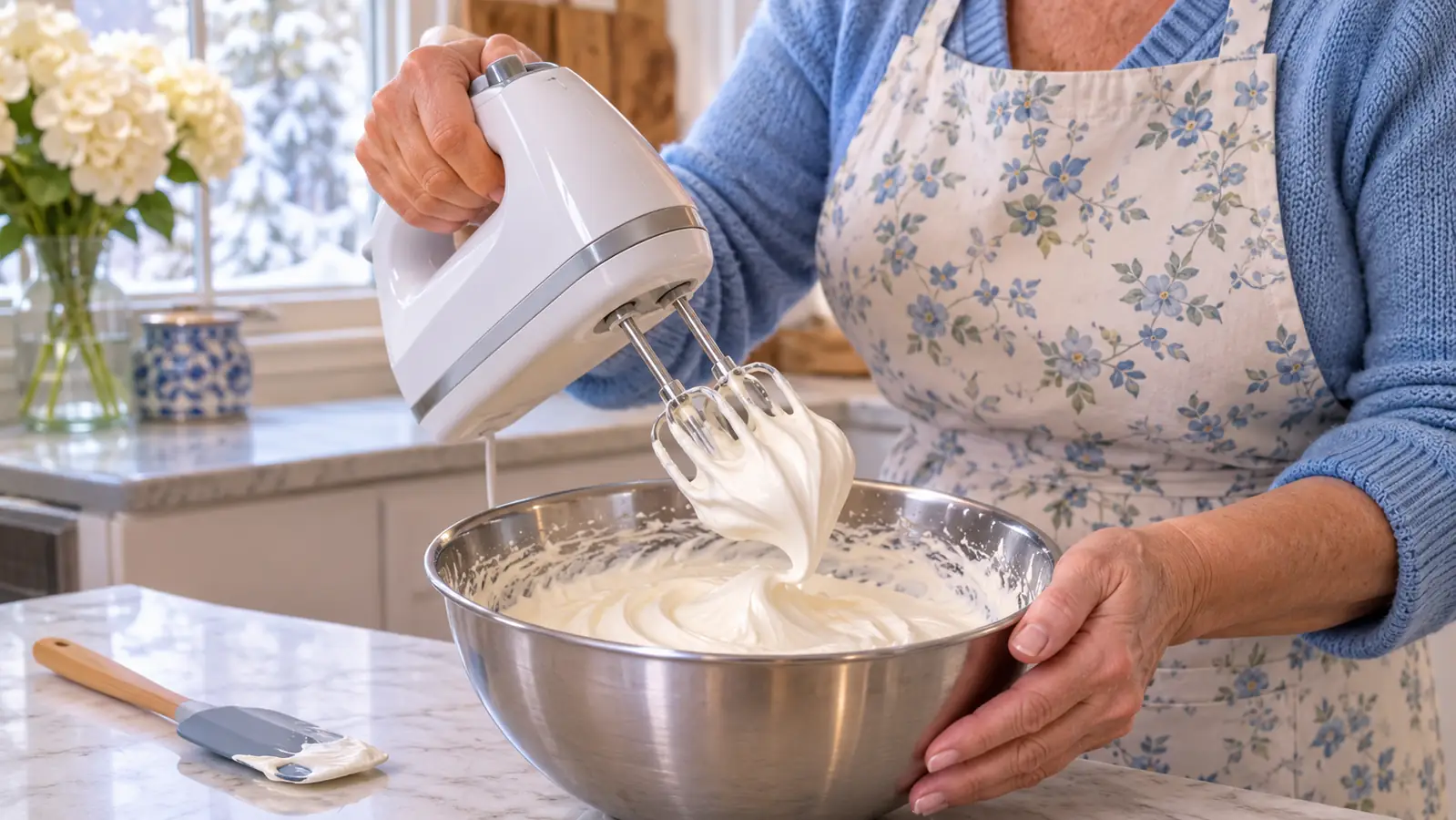
Step 2: Fit the beaters, start low, and pick a bowl with room
The beaters and the whisk live in the snap-on case that came with the mixer, which is the reason the thing stays in a drawer instead of a cabinet I have to climb into. Two traditional beaters for cream, mashed potatoes and cookie dough. The whisk for egg whites and anything I want light. Fit them until they click, then tug once to check, because a beater that is not seated all the way will walk out of the bowl at the worst possible moment and take a quart of cream with it.
Start on the lowest speed. Six speeds sounds like a selling point until you understand what the bottom two are actually for, which is keeping cream and egg whites inside the bowl while they go from liquid to something with body. On speed one the cream thickens without throwing a sheet of it onto the cabinet, and then you can step up to three or four for the real work. I rarely go past four for cream. Five and six are for mashed potatoes and stiff cookie dough, not for anything that foams.
The bowl rest is a small feature I did not expect to use and now use constantly. When the phone rings, or I need both hands for the sugar, the mixer sits on the rim of the bowl instead of face down on the counter. The cord is five feet, which sounds like a minor detail until you have owned a mixer with a short one. Five feet gets me from the outlet by the range to the sink side of the counter, which is where I do most of the work and where most of the mess happens anyway.
I have made whipped cream in this drawer mixer nearly every Sunday for four years, and the only batches I ruined were the ones where I walked away from the bowl.
Step 3: For cream, stop before you think you should
Cream is the one that punishes you for looking away. Start counting at sixty seconds and watch the side of the bowl from then on. First the beaters leave a trail that disappears right away. Then the trail holds for a second before it sinks back in. That second stage is soft peaks, and for most desserts it is exactly where you want to stop.
For one cup of heavy cream in a chilled bowl, that is roughly a minute and a half to two minutes on speed three or four. Stiff peaks, the kind that stand up on the beaters when you lift them, are another twenty or thirty seconds past that and no more. I make cream for shortcake, for pies, and for the top of the chocolate pudding the grandkids ask for, and I stop at soft peaks unless the recipe says otherwise, because soft cream folds into things without collapsing them into a puddle on the plate.
If it does go too far and starts looking grainy, stop the mixer, add a spoonful of cold cream, and fold it through with a spatula by hand. That rescues a batch that is nearly gone. If it has already separated into a solid mass and thin liquid, you have made butter, and there is nothing to be done but salt it and call it a win. That has happened to me once in four years. I was on the phone, and the phone was not worth it.
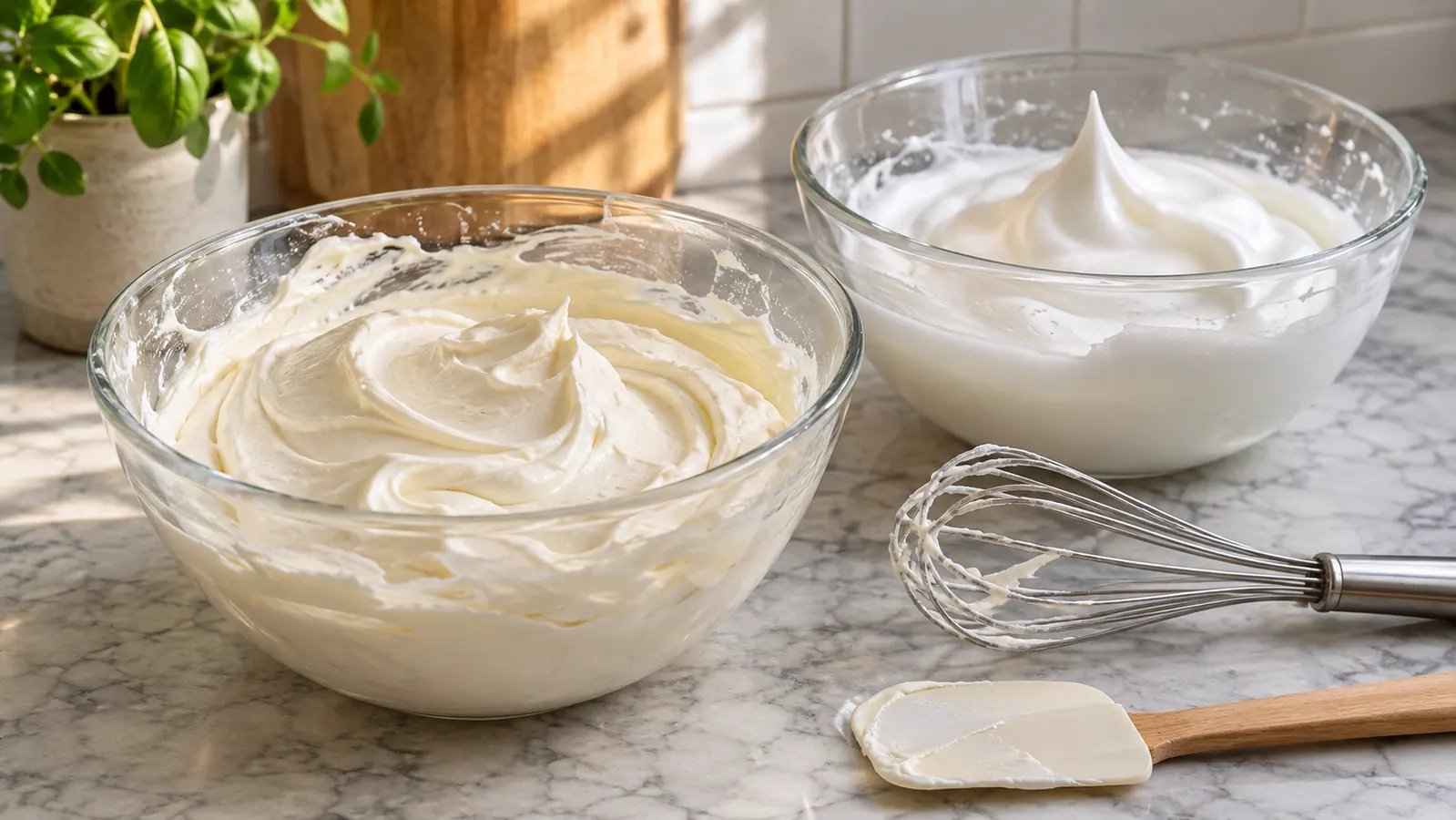
Step 4: For egg whites, slow first, then fast, and stop at the peak you need
Egg whites need a different rhythm. With a clean bowl and clean beaters, start on the lowest speed for thirty seconds or so. That breaks the whites up and starts the foam without flinging them up the sides of the bowl. Then move to four or five and let the mixer do the work. With the whisk attached, four whites take about two minutes to reach soft peaks and closer to three to reach stiff ones. If you start on high, you get big loose bubbles that collapse the moment you fold anything into them.
A pinch of cream of tartar, or a teaspoon of lemon juice, helps if your whites are older or the bowl has seen a lot of use. If the recipe calls for sugar, add it a spoonful at a time once the whites have started to foam, not before. Dumping a cup of sugar into liquid whites is the fastest way to end up with something that whips for ten minutes and never gets anywhere, and then you are standing over the sink wondering what went wrong.
Know the peak you need before you start. Soft peaks flop over when you lift the whisk. Stiff peaks stand up with a tip that holds. Dry peaks look clumped and dull, and they are further along than most recipes want. For a meringue that gets baked, take it to stiff. For folding into a batter or a souffle, stiff but still glossy is right, and overbeaten whites break into lumps that no amount of folding will bring back.
Step 5: Finish by hand, then unload the beaters
When the bowl comes off the mixer, give it ten or fifteen strokes with a rubber spatula, turning the bowl as you go. Machine-whipped cream and machine-whipped whites both hide small uneven pockets, and a few strokes by hand even them out. It also lets you feel whether you have gone too far, before you fold the whole thing into something that took an hour to make.
Unloading is the part people forget. Press the speed dial and the beaters release and drop out, which is far better than pulling them out by hand with the motor still running. Hold them over the sink when you do it. The beaters and the whisk are dishwasher safe, so they go in the top rack. The body of the mixer gets a damp cloth and nothing more. Do not put the body in water, no matter how much of a hurry you are in, because that is how a mixer that should last a decade lasts a year.
Then coil the five-foot cord loosely around the back, put the beaters and the whisk back in the snap-on case, and the whole thing goes into the drawer. That routine takes about a minute, and it is the reason a four-year-old Hamilton Beach hand mixer still works the way it did the week I bought it. Small machines survive because they get put away properly, not because they cost more. The case is the part I would miss most if it disappeared.
What Else Helps
Use a bigger bowl than you think you need. Cream roughly doubles and egg whites can grow six or eight times their volume, and a bowl that is too small means you are whipping the counter as much as the cream. A deep stainless bowl with a rounded bottom is the one I reach for, and it is also the one that goes in the freezer without any worry. Glass works fine. Plastic is all right for cream and not for whites, for the fat reason I already mentioned.
Whip cream close to when you plan to serve it. Cream that sits for an hour loses air and starts to look slack, and re-whipping brings back some of it and never all of it. If it has to hold, a tablespoon of powdered sugar per cup helps, and so does a quarter teaspoon of unflavored gelatin bloomed in cold water, though I only bother with the gelatin when the grandkids are coming and dinner is running late. Egg whites are the opposite. Once they are whipped, use them within a few minutes, because they start to separate and weep the longer they sit.
There are times a stand mixer earns its counter space. My sister Carol has one, and for a big batch, or for a seven-minute frosting that needs both hands and a hot water bath, it is genuinely the better tool. But a stand mixer on the counter is a foot of space I do not have, and four years of weekly use on this hand mixer tells me that for two people and a Sunday dinner, the smaller machine is enough. The 250 watts handle a double batch of cream without straining, and at 1.3 kilograms it does not wear out my wrist in the two or three minutes it takes.
If your cream keeps turning to butter, it is not the mixer
It is the ninety seconds you were not watching. Six speeds, a bowl rest, a five-foot cord and a storage case that keeps the beaters where you can find them. Mine has earned its drawer.
Amazon Check Today's Price on Amazon →